Theo Washington · 14 September 2026
Titanium Alloy Trials Open New Paths for Lens Housing Stability Across European Optics Facilities
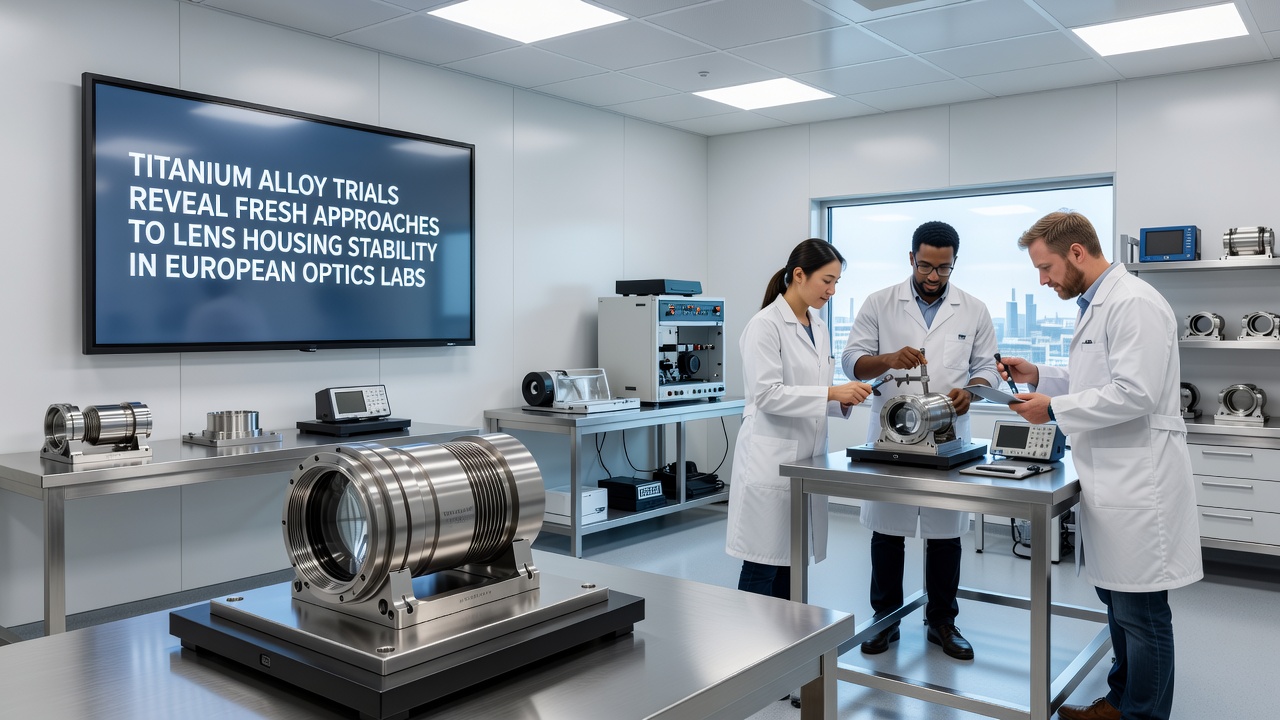
European optics labs have launched a series of titanium alloy trials that focus on improving lens housing stability under varying thermal and mechanical loads, and these efforts build on established materials science practices while introducing targeted modifications to alloy compositions and housing geometries. Researchers at multiple sites across Germany, France, and the Netherlands have documented how specific titanium grades respond to precision machining and surface treatments, and data from these tests indicate measurable reductions in deformation when housings encounter temperature swings typical of astronomical instruments or satellite payloads.
Background on Lens Housing Requirements
Optics systems demand housings that maintain alignment tolerances measured in micrometers, yet conventional materials often expand or contract enough to shift focal planes during operation. Titanium alloys have entered the conversation because their coefficient of thermal expansion sits lower than many aluminum alternatives, and European facilities have therefore allocated resources to systematic testing programs that began scaling up in 2025. Labs report that early-stage prototypes already demonstrate housing rigidity improvements when alloy batches undergo controlled heat treatments followed by stress-relief cycles, while subsequent machining steps preserve the required surface finishes for mounting delicate lens elements.
Key Trial Methods and Alloy Variants
Teams have compared several titanium alloy formulations, including variants with added vanadium and aluminum, against baseline materials used in prior generations of optical assemblies. In one set of experiments conducted at a facility near Munich, engineers applied finite element modeling to predict stress distributions before physical prototypes were fabricated, and results aligned closely with measured outcomes once the housings were subjected to cyclic loading protocols. Another laboratory in Delft integrated sensors directly into test articles to capture real-time strain data, revealing that certain surface passivation techniques further stabilize dimensions without introducing unwanted birefringence effects in adjacent optical components.
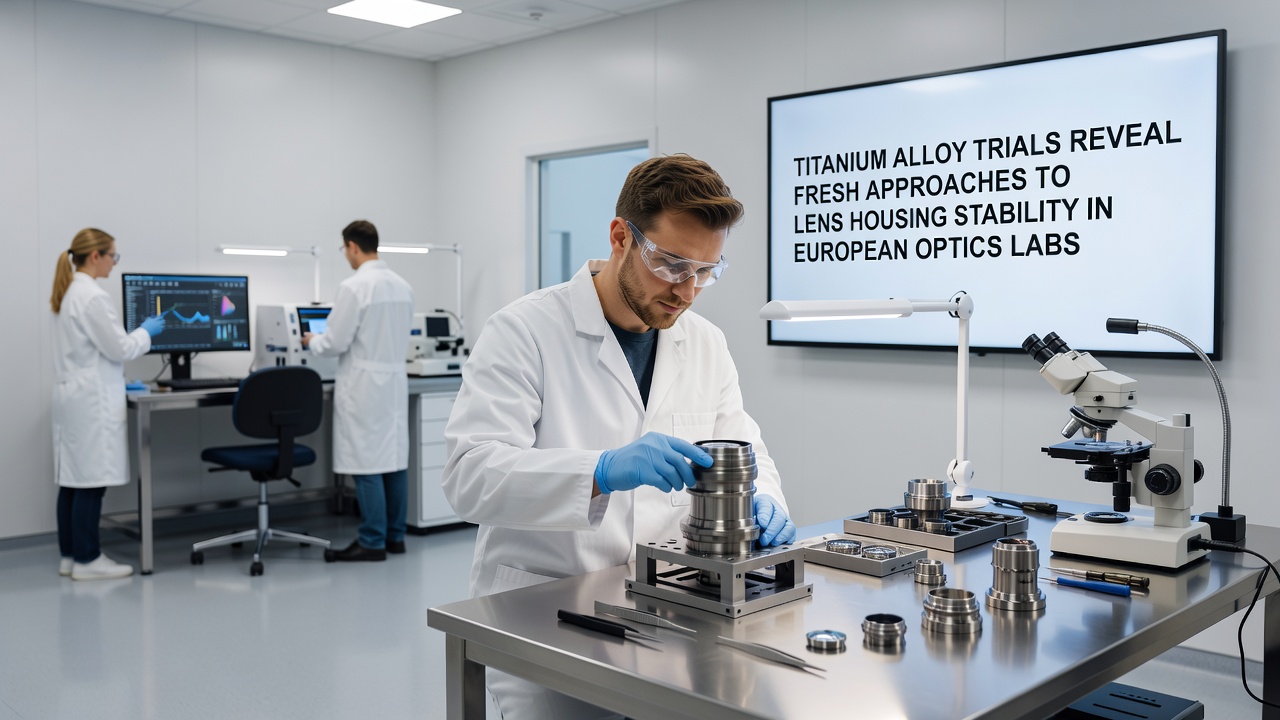
September 2026 is slated for the release of consolidated datasets from these parallel trials, and participating institutions plan to publish joint findings that outline recommended processing parameters for future production runs. Observers note that collaboration between academic groups and industrial partners has accelerated iteration cycles, allowing adjustments to alloy purity levels and heat-treatment durations based on interim measurements collected throughout 2025.
Integration with Existing European Research Infrastructure
Facilities involved in the work draw on shared resources such as synchrotron beamlines for microstructural analysis and high-precision coordinate measuring machines for verifying housing geometries after thermal cycling. European Space Agency documentation on materials performance in vacuum environments has informed several test protocols, particularly those addressing outgassing rates and long-term dimensional stability. Complementary input comes from national metrology institutes that supply calibrated reference standards, ensuring that reported improvements in housing stiffness remain traceable to international measurement systems.
Additional trials have explored hybrid approaches that combine titanium alloy frames with localized ceramic inserts at mounting points, and early indications suggest these configurations further dampen vibration transmission while preserving the overall mass advantages of titanium. Researchers at a site in Grenoble have recorded that such hybrid housings maintained centration within specified limits after repeated exposure to simulated launch vibrations, and similar tests are now expanding to include cryogenic conditions relevant to infrared instruments.
Data Patterns Emerging from Multiple Sites
Across the participating labs, figures reveal consistent trends: titanium alloy housings processed with optimized aging treatments exhibit lower residual stresses than those left in as-machined states, and the difference becomes pronounced when assemblies undergo repeated temperature excursions between minus 40 and plus 60 degrees Celsius. One collaborative paper scheduled for presentation at an optics conference later in 2026 compiles these observations and compares them against computational predictions generated by several independent modeling teams. National Institute of Standards and Technology reports on titanium alloy behavior under thermal gradients have served as reference benchmarks during validation phases.
Equipment suppliers have responded by refining tooling geometries specifically for titanium, and this has reduced cycle times during the final polishing stages of housing bores. European optics groups therefore anticipate shorter lead times for custom housings once the trial results translate into updated manufacturing guidelines.
Conclusion
The ongoing titanium alloy trials continue to generate practical data that European optics labs can apply directly to lens housing designs, and the coordinated schedule culminating in September 2026 positions the community to adopt refined specifications without extended delays. Continued monitoring of prototype performance under operational conditions will determine how broadly these approaches extend into production systems for ground-based telescopes and space instrumentation alike.