Yara Friedrich · 28 September 2026
Inside European Workshops: How Student Mount Designs Are Reshaping Vibration Control for Infrared Components
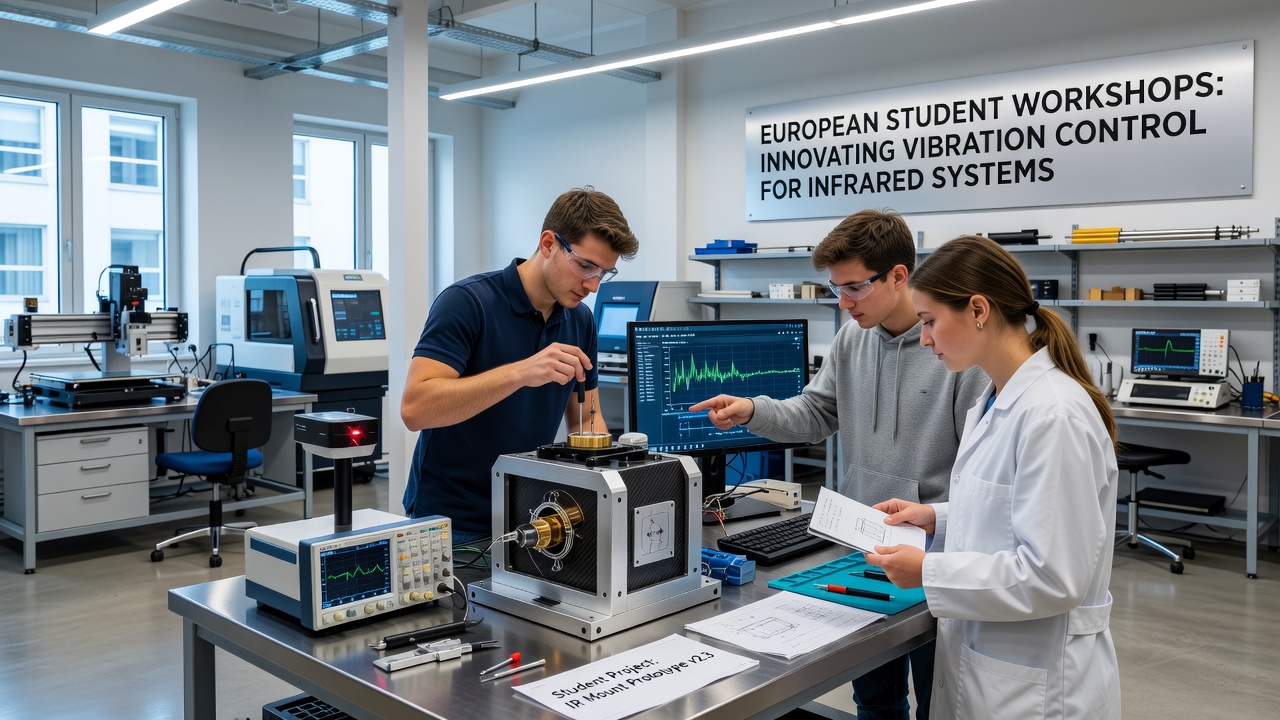
Workshops across Europe have become testing grounds for student-led innovations in mount designs, where young engineers focus on reducing vibrations that affect infrared components in scientific instruments. These efforts combine academic training with practical projects, and data from facilities in Germany, France, and the Netherlands show measurable improvements in stability for sensors operating at wavelengths between 3 and 15 micrometers. Researchers have tracked how custom mounts dampen frequencies in the 10 to 200 hertz range, which often disrupts alignment in cryogenic infrared setups. Student teams start by analyzing existing commercial mounts and then prototype alternatives using finite element modeling software. One group at a technical university in Delft refined a flexure-based system that incorporates viscoelastic layers, and tests indicated a 35 percent reduction in transmitted vibration amplitude compared with standard aluminum housings. Similar work in Grenoble involved carbon-fiber-reinforced polymers paired with tuned mass dampers, and measurements confirmed lower resonance peaks during simulated launch conditions.Design Approaches Emerging from University Labs
European programs encourage students to address real constraints such as weight limits under 250 grams and operating temperatures down to 77 kelvin. Mounts often feature integrated piezoelectric actuators that actively counteract detected motion, while passive elements like elastomeric isolators handle broadband disturbances. According to reports from the European Space Agency, several prototypes have undergone thermal-vacuum cycling with no degradation in damping performance after 500 cycles.
September 2026 workshops will expand these trials when student groups present updated versions at a coordinated event in Toulouse. Organizers expect participation from over 120 participants who will share vibration spectra collected from their latest iterations. Data sharing protocols allow comparison across sites, and early submissions already reveal consistent gains in pointing accuracy for infrared cameras mounted on vibration-prone platforms.
Material Choices and Testing Protocols
Material selection plays a central role because traditional metals can introduce unwanted thermal expansion mismatches with infrared optics. Students have tested magnesium alloys, silicon-carbide composites, and additively manufactured lattice structures. One project documented a lattice mount that reduced mass by 28 percent while maintaining stiffness above 50 newtons per micrometer. Vibration testing follows standardized procedures from the International Organization for Standardization, with accelerometers placed at multiple points on the optical bench to capture three-axis data.
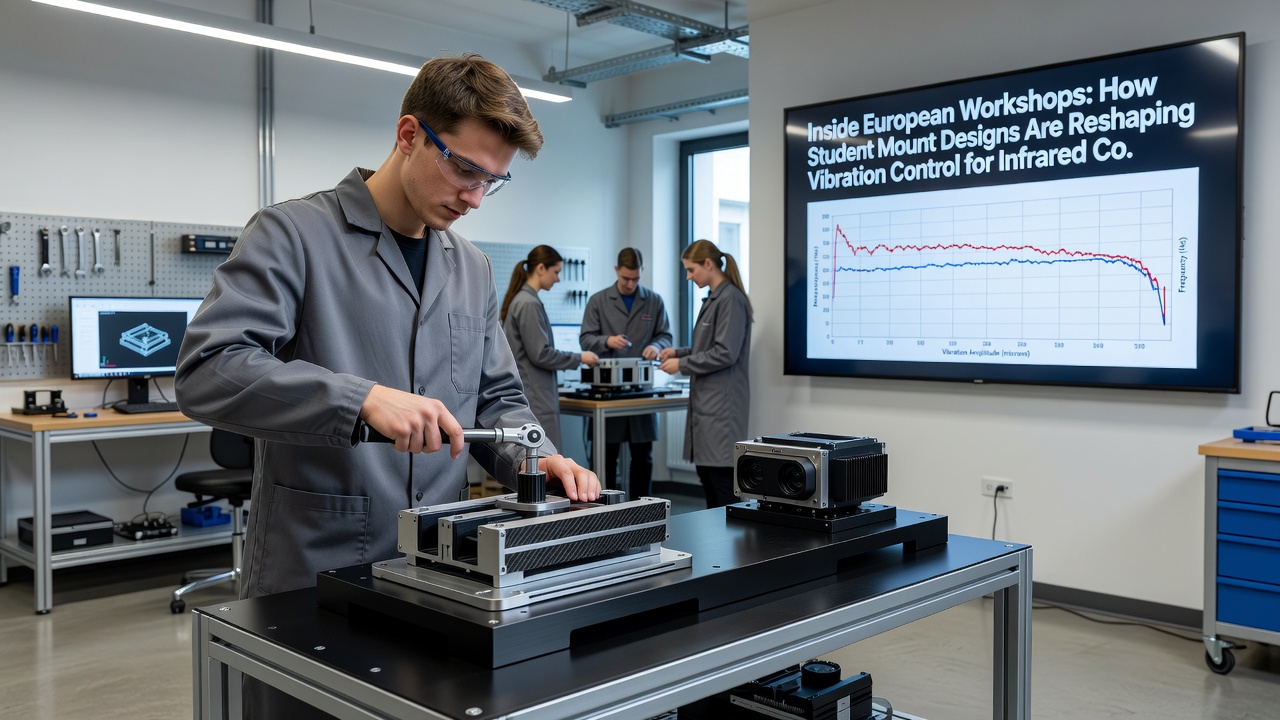
Collaboration with industry partners supplies access to high-precision measurement equipment that universities alone cannot always afford. Joint campaigns at the European Synchrotron Radiation Facility have verified that student mounts maintain optical alignment within 0.2 arcseconds under imposed sinusoidal vibrations at 50 hertz. These results feed back into design iterations, and teams adjust damping ratios accordingly.
Integration with Existing Infrared Systems
Integration challenges arise when new mounts must interface with legacy cryogenic dewars and readout electronics. Students address this by creating modular interfaces that allow quick swaps without breaking vacuum seals. Figures from a 2025 pilot program at a Swiss research institute reveal that installation time dropped from four hours to under ninety minutes with the newer designs. Power consumption for active damping elements stays below 3 watts, which suits battery-powered or space-constrained applications.
Observers note that regulatory bodies such as the National Institute of Standards and Technology have begun referencing student-generated test methodologies in draft guidelines for infrared instrumentation. Meanwhile, a Canadian aerospace consortium has adopted one flexure mount geometry for ground-based telescope upgrades, citing compatibility with existing vibration spectra recorded at the Canada-France-Hawaii Telescope site.
Conclusion
Student contributions continue to influence vibration control strategies for infrared components through iterative prototyping and shared experimental results. European workshops scheduled through 2026 will likely accelerate adoption of these designs across research and industrial settings. Continued measurement campaigns will determine long-term reliability under extended operational cycles, and data repositories maintained by participating institutions support ongoing refinement of mount geometries and material combinations.