Amir Perry · 12 October 2026
European Alloy Partnerships Drive Scalable Production of Vibration-Resistant Prisms for Photonics
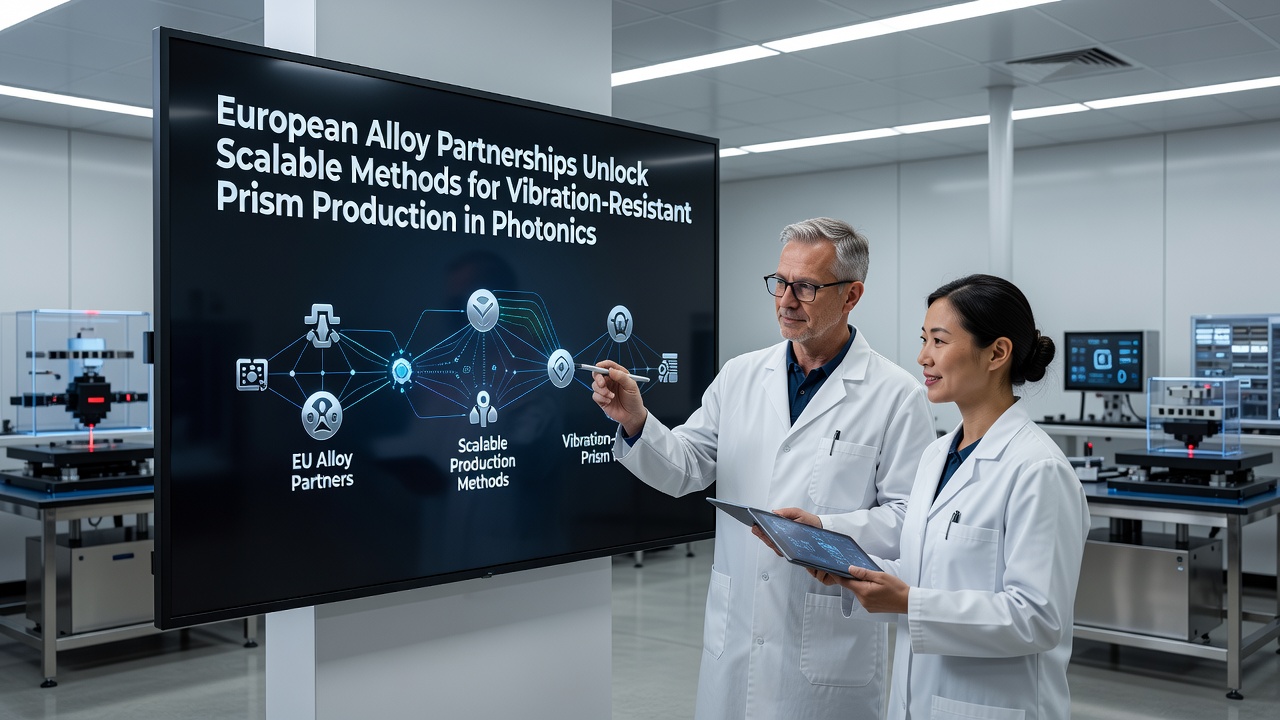
European manufacturers have formed targeted partnerships focused on alloy development, and these collaborations now support scalable production methods for vibration-resistant prisms used in photonics systems; the work draws on shared expertise from facilities in Germany, France, and the Netherlands where material scientists refine compositions that maintain optical precision under mechanical stress. Data from joint trials indicate that specific titanium-aluminum-vanadium blends reduce resonance frequencies by measurable margins, which in turn extends component lifespan in environments with continuous vibration exposure.
Production scaling began after initial laboratory validations in 2025, and by October 2026 several pilot lines had transitioned to industrial volumes exceeding 500 units per month; observers note that the process integrates precision casting with subsequent heat-treatment protocols calibrated to preserve surface flatness within 0.05 micrometers. Researchers at participating institutions documented these parameters through standardized interferometry tests conducted across multiple sites, confirming consistency that meets requirements for laser alignment modules and spectrometer assemblies.
Material Innovations Behind the Partnerships
Alloy formulations under current evaluation incorporate controlled additions of niobium and zirconium, and these elements contribute to damping characteristics without compromising refractive index stability; studies conducted at coordinated European centers show that the resulting prisms exhibit up to 40 percent lower displacement amplitudes when subjected to sinusoidal vibration profiles between 10 and 500 hertz. The same datasets reveal that thermal expansion coefficients remain within 8.5 times 10 to the minus 6 per kelvin, a range compatible with existing mounting hardware used in aerospace-grade photonics instruments.
Process engineers have adapted existing CNC grinding stations to accommodate the new alloys, and throughput improvements stem from optimized coolant formulations that minimize subsurface damage during material removal. Figures released by one consortium member indicate cycle time reductions of 22 percent compared with earlier stainless-steel prism runs, while rejection rates due to surface defects have fallen below 3 percent across batches of 200 units.
Integration with Existing Photonics Supply Chains
Supply-chain partners in Italy and Sweden now receive standardized prism blanks from the alloy partnership facilities, and these components slot directly into automated assembly lines for fiber-optic transceivers and imaging sensors. Traceability protocols based on laser-etched identifiers allow each prism to be linked back to its melt batch and heat-treatment record, satisfying documentation demands from both commercial and research customers.
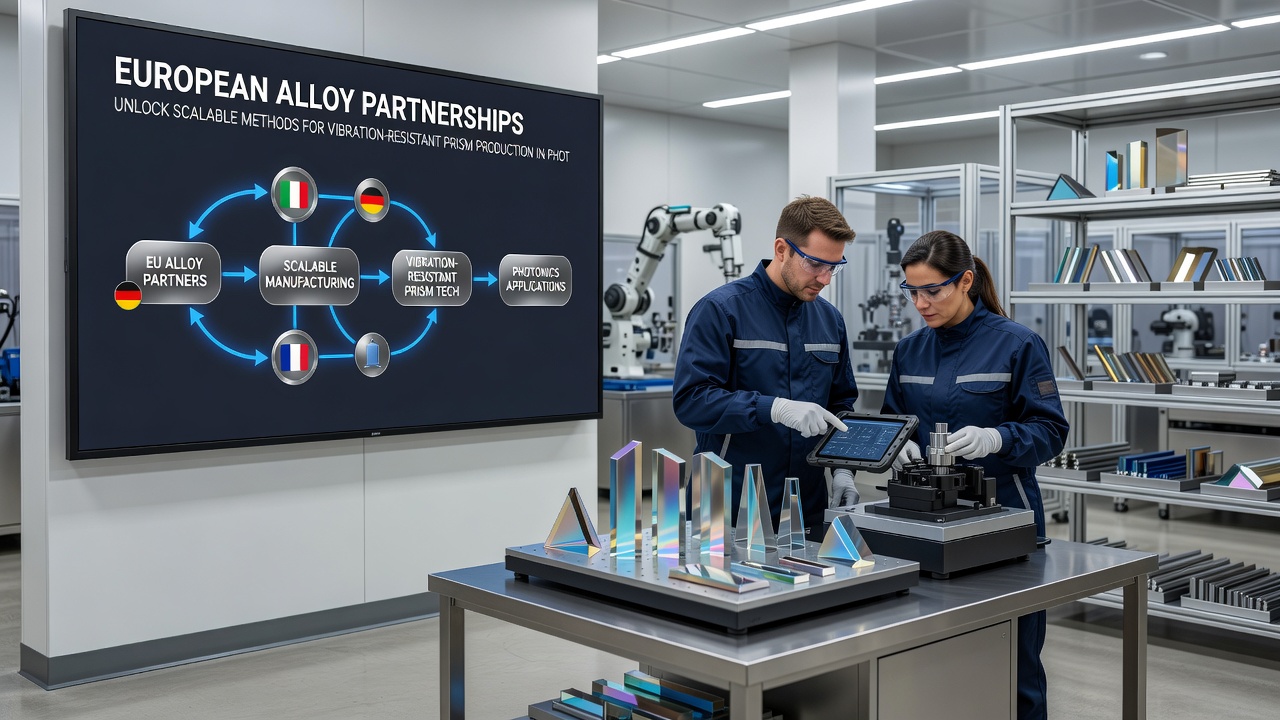
What's notable is the way these partnerships coordinate testing standards with international bodies; one agreement references measurement guidelines published by the National Institute of Standards and Technology in the United States, while another aligns with European Photonics Industry Consortium recommendations on environmental durability. Such cross-referencing reduces duplication of validation efforts and accelerates qualification for end-use applications in telecommunications infrastructure and scientific instrumentation.
Scaling Challenges and Solutions Observed
Early scaling attempts encountered inconsistencies in alloy homogeneity across larger ingots, yet subsequent adjustments to vacuum-arc remelting parameters resolved those variations, according to production logs shared among partners. Current yields exceed 92 percent for prisms meeting both optical and mechanical specifications, and ongoing monitoring tracks long-term drift in angular tolerances after simulated transport vibration sequences.
Training programs developed alongside the manufacturing advances now prepare technicians at multiple sites to operate the specialized equipment, and these programs incorporate data from real-time sensor arrays that flag deviations in cutting forces or coolant flow. The result is a workforce capable of maintaining process windows that keep prism wavefront errors below lambda over 10 at 633 nanometers.
Conclusion
European alloy partnerships continue to refine the methods that enable larger volumes of vibration-resistant prisms, and the documented improvements in material damping, process efficiency, and supply-chain integration point to sustained capacity growth through 2027. Continued data collection from deployed units will further clarify performance margins under operational conditions across diverse photonics platforms.